
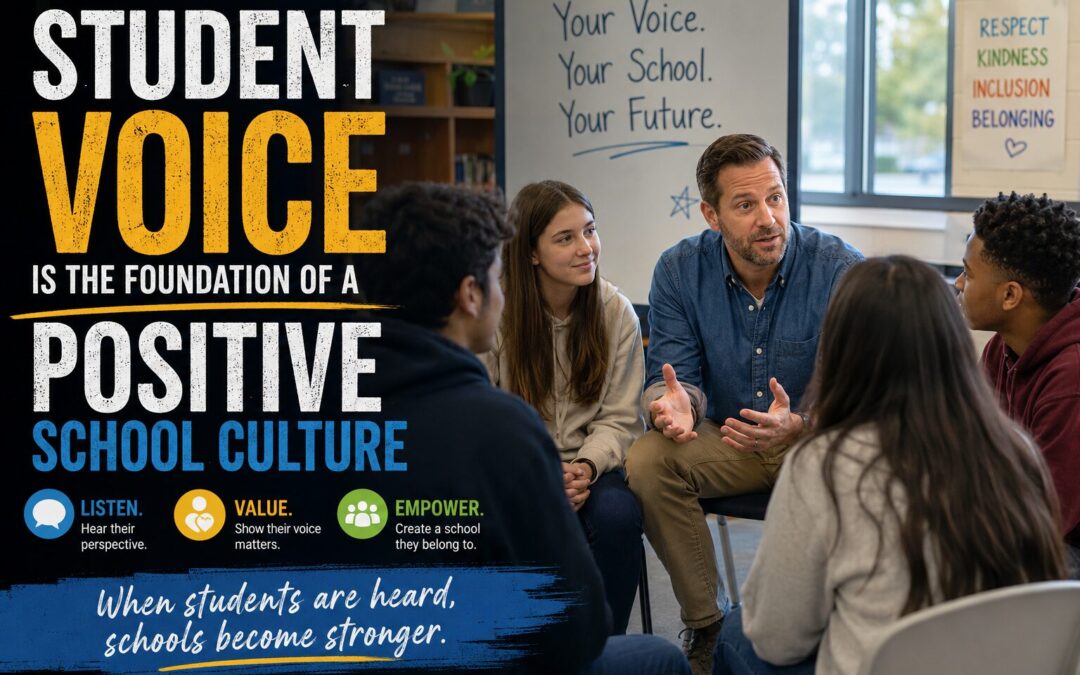
Every school wants a positive culture. Teachers want students who are engaged. Administrators want hallways that feel welcoming instead of tense. Parents want their children to feel safe, respected, and excited to learn. Students want something much simpler. They want to know they matter.
That feeling of being seen and heard is often the difference between a student who thrives and one who quietly checks out. Schools spend countless hours creating new programs, updating policies, and searching for ways to improve school climate, but one of the most powerful tools is already sitting in every classroom. It is the voices of the students themselves.
Student voice is more than asking for opinions during a survey or inviting a handful of students to join a committee. It is about creating an environment where students believe their experiences, ideas, and concerns genuinely matter. When students know adults are listening, they begin to trust. That trust becomes stronger relationships, greater engagement, and a healthier school culture for everyone.
Schools that prioritize student voice often discover something surprising. The students already know many of the challenges their school faces. More importantly, they often have valuable ideas about how those challenges can be addressed. Giving students a voice does not mean giving up leadership. It means building leadership together.
What Student Voice Really Means
Student voice has become a popular phrase in education, but it is sometimes misunderstood. It is not simply allowing students to speak during class discussions or vote on spirit week themes. Real student voice goes much deeper.
Student voice means creating meaningful opportunities for students to share their perspectives, experiences, and ideas while knowing they will be treated with respect. It means asking questions and being willing to hear honest answers. Sometimes those answers are encouraging. Sometimes they reveal difficult truths that adults need to hear.
Students experience school differently than teachers, administrators, and parents. They notice things adults may never see. They understand the social pressures happening between classes, the anxiety some students carry every day, and the small moments that either make someone feel included or invisible.
When schools genuinely listen to students, they gain insights that cannot be found through data alone.
Every Student Wants to Be Heard
One of the greatest misconceptions about teenagers is that they do not care. Adults sometimes mistake silence for indifference. In reality, many students simply believe their opinions will not change anything.
A student who has repeatedly felt ignored eventually stops speaking up. Another student may never volunteer because they fear embarrassment. Others may worry that sharing honestly could lead to punishment or judgment.
These students are not disconnected because they lack opinions. They are disconnected because they have lost confidence that anyone is listening.
When schools intentionally create opportunities for students to share their stories, something remarkable happens. Students begin participating more. They become more invested in their classrooms and their peers. They start viewing school as something they belong to instead of something they simply attend.
Feeling heard is one of the most basic human needs. Students are no different.
School Culture Begins With Relationships
Many conversations about school culture focus on rules, expectations, or discipline. While those things certainly matter, they are not the foundation of a healthy school.
Relationships are.
Positive school culture grows when students trust the adults around them. It develops when teachers know students beyond attendance sheets and test scores. It becomes stronger when administrators are visible, approachable, and willing to have real conversations.
Student voice strengthens each of these relationships.
When a principal asks students what could improve their school and follows through on those conversations, trust grows. When teachers invite students to reflect on classroom experiences and make adjustments based on that feedback, respect grows. When counselors create spaces where students feel comfortable discussing difficult topics, connection grows.
Relationships built on listening are far more powerful than relationships built only on authority.
Students Notice More Than Adults Realize
Adults often believe they understand everything happening inside their schools. While educators have tremendous experience, students see the building through an entirely different lens.
They know which students eat lunch alone every day.
They know where bullying happens when adults are not watching.
They know which classmates are struggling emotionally even when those students never ask for help.
They know when classmates are pretending everything is fine.
Students also notice positive moments. They remember teachers who took extra time to listen. They remember administrators who greeted them by name. They remember assemblies that felt authentic instead of repetitive.
These experiences shape how students feel about school every single day.
When schools create opportunities for honest student conversations, they gain a clearer picture of what daily life actually feels like for the people they serve.
Why Student Voice Improves Student Engagement
One of the biggest challenges schools face today is student disengagement. Across the country, educators are working hard to increase attendance, participation, and motivation.
Student voice plays an important role in solving all three.
People naturally become more invested in environments where they feel valued. Students are no different.
When students know their ideas matter, they begin taking greater ownership of their education. They participate more actively during discussions. They volunteer for leadership opportunities. They become more willing to contribute to projects and school activities.
This does not happen overnight, but it happens consistently.
Engagement is not created by making school more entertaining. It is created by helping students believe they are meaningful members of their school community.
Listening Builds Confidence
Confidence does not develop simply because someone receives praise. It develops when people believe their contributions have value.
For students, being listened to sends a powerful message.
It tells them their experiences matter.
It tells them their ideas deserve consideration.
It tells them they are capable of making a difference.
These messages stay with students long after graduation.
Students who are encouraged to speak respectfully, solve problems collaboratively, and share ideas confidently develop skills they will carry into college, careers, and their communities.
Learning how to communicate effectively may be one of the most valuable lessons school can offer.
Student Leadership Starts With Student Voice
Leadership is often associated with student council officers, team captains, or club presidents. While those students certainly play important roles, leadership opportunities should extend far beyond a small group.
Every student has the ability to lead.
Sometimes leadership looks like standing up for a classmate.
Sometimes it means welcoming a new student.
Sometimes it means speaking honestly about challenges facing the school.
Student voice creates opportunities for leadership that reach students who may never have considered themselves leaders before.
When schools encourage every student to participate in meaningful conversations, leadership becomes part of the culture instead of a title held by only a few.
Honest Conversations Create Stronger Schools
Schools are filled with important conversations every day, but some of the most meaningful ones never happen because people feel uncomfortable starting them.
Students may want to discuss bullying, anxiety, loneliness, social media pressure, racism, or family struggles. Adults may hesitate because they worry about saying the wrong thing.
Avoiding these conversations rarely solves the problem.
Creating spaces where students can speak honestly often reduces fear instead of increasing it.
When students realize they are not alone in their experiences, they become more willing to seek help. They begin supporting one another. They discover that vulnerability often creates stronger communities instead of weaker ones.
Authentic conversations build authentic relationships.
Student Voice Supports Mental Health
Mental health continues to be one of the most important topics in education. Schools cannot solve every challenge students face outside the classroom, but they can create environments where students feel supported.
Listening is one of the simplest forms of support.
Students who feel heard are more likely to reach out when they are struggling. They are more likely to trust counselors, teachers, and administrators. They are more likely to believe someone cares about what they are experiencing.
Feeling connected does not eliminate anxiety, depression, or other mental health concerns, but it creates an important foundation for seeking help.
No student should feel invisible.
Teachers Benefit Too
Student voice is not only beneficial for students. Teachers gain valuable insight as well.
Every educator wants to create engaging lessons and meaningful classroom experiences. Honest student feedback helps make that possible.
Students may explain why certain assignments were especially impactful. They may describe classroom routines that help them learn. They may identify obstacles that adults had never considered.
This feedback is not criticism. It is collaboration.
Teachers who invite student perspectives often discover new ways to connect with learners while strengthening classroom relationships at the same time.
Building Trust Takes Time
Trust cannot be created through a single assembly, classroom discussion, or survey.
Students pay close attention to consistency.
If schools ask for feedback but never act on it, students quickly notice. If adults encourage honesty but react defensively when students speak openly, trust begins to disappear.
Building trust requires patience.
It requires adults who are willing to listen without immediately offering solutions. It requires follow-through when students identify areas for improvement. Most importantly, it requires genuine respect for student perspectives.
Students do not expect perfection from adults.
They simply want authenticity.
Schools Are Stronger When Students Feel They Belong
Belonging has become one of the most important indicators of student success.
Students who feel connected to their school are more likely to attend regularly, participate in activities, build healthy relationships, and stay engaged academically.
Belonging cannot be manufactured through posters or slogans.
It grows through everyday interactions.
It grows when teachers learn students’ names quickly.
It grows when administrators spend time in classrooms and hallways.
It grows when students are invited into meaningful conversations about improving their school.
Student voice helps create that sense of belonging because it reminds students they are valued members of their community.
Looking Beyond Test Scores
Education has always included academic goals, and those goals remain important. Reading levels, graduation rates, and college readiness all matter.
But schools also shape future citizens, leaders, coworkers, neighbors, and parents.
The ability to communicate respectfully, solve problems collaboratively, and listen to different perspectives may be just as important as academic achievement.
Student voice helps schools develop these lifelong skills.
When students participate in meaningful conversations, they practice empathy, critical thinking, confidence, and leadership. These experiences prepare them for life long after high school ends.
A Culture That Lasts
Positive school culture is not created by a single initiative or motivational slogan. It is built through thousands of daily interactions between students and adults who choose to listen to one another.
Student voice is not about giving students all the answers. It is about recognizing they are an essential part of finding them.
Every student arrives at school carrying unique experiences, challenges, dreams, and perspectives. When those voices are welcomed instead of overlooked, schools become places where people feel connected rather than isolated.
The strongest schools are not necessarily the ones with the newest buildings or the biggest budgets. They are the ones where students believe they belong, where educators value authentic relationships, and where every person understands that their voice has meaning.
When students know they are heard, they become more confident. They become more engaged. They become leaders in ways that reach far beyond graduation.
Positive school culture begins with many things, but lasting change almost always starts the same way.
It starts by listening.

President & CEO, TEEN TRUTH