
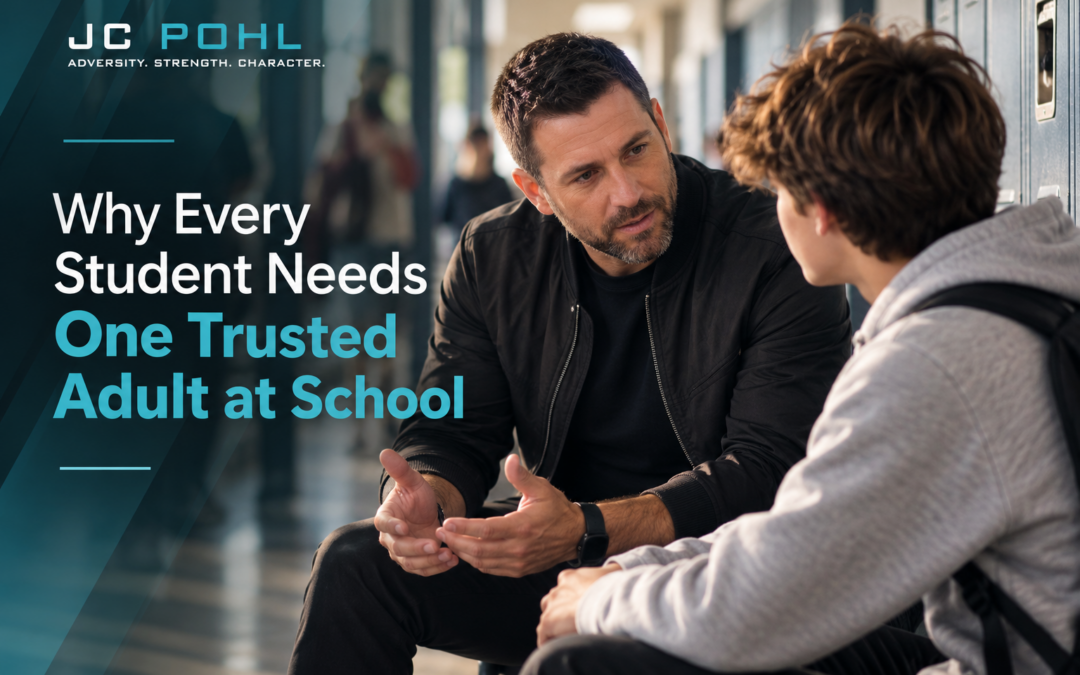
Every student deserves to know there is at least one adult at school who genuinely believes in them. It doesn’t have to be a teacher they see every day or a counselor they meet with regularly. It could be a coach, principal, librarian, campus supervisor, office staff member, or another caring adult who consistently takes the time to listen, encourage, and build a relationship. What matters most is that students know there is someone in the building they can trust.
Schools are often measured by academic performance, graduation rates, and standardized test scores. Those metrics certainly matter, but they rarely tell the full story. Before students can reach their academic potential, they need to feel safe, supported, and connected. Relationships are often the foundation that allows learning to happen. When students know they matter to someone, they become more willing to participate, ask questions, overcome challenges, and believe in their own potential.
Throughout a student’s educational journey, one trusted adult can become the difference between simply attending school and truly feeling like they belong.
Relationships Are the Foundation of Learning
Education has always been about more than delivering information. While curriculum, technology, and instructional strategies continue to evolve, one thing has remained remarkably consistent: students learn best from adults they trust.
A strong relationship creates an environment where students feel comfortable taking risks. They are more likely to ask for clarification when they don’t understand something, contribute during classroom discussions, and view mistakes as opportunities to grow rather than reasons to give up. Trust removes many of the barriers that prevent students from fully engaging in their education.
This doesn’t mean educators must become best friends with every student. Instead, it means creating genuine connections built on respect, consistency, and encouragement. Often, those relationships begin with small interactions that communicate one simple message: “I see you, and you matter.”
Feeling Seen Changes Everything
Every student enters school carrying experiences that are invisible to the people around them. Some are navigating family challenges. Others are struggling with anxiety, loneliness, financial hardship, or questions about where they fit in. While educators cannot always see what students are carrying, they can create an environment where students know someone is paying attention.
Feeling seen is one of the most powerful experiences a young person can have. It isn’t about receiving constant praise or attention. It’s about knowing that someone notices when you’re absent, remembers something important in your life, asks how you’re doing, or celebrates your progress.
These moments often seem small to adults, but they leave lasting impressions on students. Feeling seen builds confidence. It strengthens trust. Most importantly, it reminds students that they are valued for who they are, not simply for their grades or achievements.
Trust Creates the Confidence to Ask for Help
Many students struggle in silence. They worry about being judged, disappointing others, or appearing weak if they admit they need support. As a result, academic challenges, emotional struggles, and personal difficulties often remain hidden until they become much larger problems.
Having one trusted adult changes that equation.
Students who already have a relationship with a caring adult know where to turn when life becomes overwhelming. They are more likely to ask questions, seek advice, or simply talk through what they are experiencing. Those conversations may not solve every problem, but they remind students they don’t have to face those challenges alone.
Creating schools where students know exactly who they can trust should be viewed as an essential part of building a healthy learning environment.
Small Moments Often Have the Greatest Impact
When educators reflect on why they entered the profession, many remember someone who believed in them when they were young. Rarely was it because of one extraordinary event. More often, it was a collection of ordinary moments that communicated genuine care.
A teacher staying after class to answer questions.
A principal greeting students by name every morning.
A coach encouraging someone after a difficult loss.
A counselor checking in after noticing a student seemed unusually quiet.
None of these moments require significant time or resources, yet they often become memories students carry with them for decades. Relationships are rarely built through grand gestures. They grow through consistency, kindness, and showing up day after day.
Every Adult Has the Opportunity to Make a Difference
Creating a culture of connection should never rest on classroom teachers alone. Every adult who interacts with students contributes to the overall experience they have at school.
Office staff often welcome students before anyone else each morning. Bus drivers may be the first adults students see and the last they interact with before returning home. Custodians, cafeteria employees, librarians, paraprofessionals, campus supervisors, and administrators all have opportunities to build positive relationships through everyday interactions.
When every adult embraces the idea that relationships matter, students experience an entire school community that values connection rather than simply focusing on instruction.
Building a positive culture becomes a shared responsibility instead of an individual one.
Strong Relationships Build Strong Schools
School culture isn’t created through mission statements hanging on the wall. It develops through the daily experiences students have with the people around them.
Students who feel connected to adults at school are more likely to participate in activities, support their classmates, demonstrate empathy, and contribute positively to the learning environment. They begin viewing school as a community rather than simply a place they attend each day.
Those positive relationships also influence how students treat one another. When young people consistently experience respect, encouragement, and kindness from adults, they are more likely to extend those same qualities to their peers.
Culture grows one relationship at a time.
The Goal Isn’t Perfection—It’s Presence
Many educators worry they don’t have enough time to build meaningful relationships with every student. While time is always limited, relationship-building doesn’t require lengthy conversations every day.
Sometimes it is remembering a student’s name.
Sometimes it is asking about last night’s game.
Sometimes it is noticing when someone doesn’t seem like themselves.
Being consistently present often matters far more than saying the perfect thing.
Students rarely expect adults to solve every problem. More often, they simply want to know someone cares enough to notice.
The Adults Students Remember
Years after graduation, very few people remember every assignment they completed or every test they took. What they do remember are the adults who made them feel valued.
Students remember the teacher who stayed after class to listen. They remember the coach who believed in them when they doubted themselves. They remember the counselor who encouraged them during a difficult season. They remember the principal who greeted them by name instead of simply walking past them in the hallway.
These relationships often become defining moments that shape confidence long after students leave school.
Being a trusted adult doesn’t require having all the answers. It requires being present, listening with empathy, and consistently showing students they matter. Those simple actions can influence the course of a young person’s life in ways that may never fully be measured.
For school leaders, creating a culture where every student has at least one trusted adult should be more than a goal. It should become part of the school’s identity. When relationships become a priority, students are more likely to engage academically, develop stronger character, and build the confidence needed to navigate life beyond graduation.
The schools that leave the greatest impact are rarely remembered only for their academic programs. They are remembered for the people inside them. When every student knows there is an adult who believes in them, schools become more than places of learning—they become communities where students feel supported, connected, and inspired to become the very best version of themselves.
Questions School Leaders Often Ask
Why is it important for every student to have a trusted adult at school?
Having a trusted adult gives students someone they can turn to for encouragement, guidance, and support. Strong relationships help students feel safe, valued, and connected, which can improve their confidence, engagement, and overall school experience.
Who can be a trusted adult in a school?
A trusted adult can be anyone who consistently builds positive relationships with students. This may include teachers, counselors, principals, assistant principals, coaches, librarians, office staff, cafeteria employees, bus drivers, or other members of the school community who take the time to listen and show they care.
How do positive relationships impact student learning?
Students learn more effectively when they feel supported and respected. Strong relationships encourage students to participate in class, ask questions, seek help when needed, and stay engaged in their education. Trust creates an environment where learning becomes more meaningful.
What can educators do to become trusted adults?
Building trust often begins with small, consistent actions. Learning students’ names, checking in regularly, listening without judgment, recognizing effort, and showing genuine interest in their lives all help create meaningful relationships over time.
Can one trusted adult really change a student’s life?
Yes. Many adults can point to a teacher, coach, counselor, or mentor who made a lasting impact during their school years. A single positive relationship can increase a student’s confidence, strengthen their sense of belonging, and encourage them to overcome challenges they might otherwise face alone.
Why do relationships matter more than ever in today’s schools?
Students face a wide range of challenges both inside and outside the classroom, including academic pressure, social media, mental health concerns, and family stress. Positive relationships provide stability, encouragement, and a sense of belonging that helps students navigate these challenges more successfully.
How can school leaders create a culture where every student feels connected?
School leaders can encourage a relationship-focused culture by making student connection a shared responsibility. When every adult on campus is committed to building meaningful relationships, students are more likely to feel supported, engaged, and valued throughout their educational journey.
What role does belonging play in student success?
A sense of belonging helps students feel accepted, respected, and included within their school community. When students know they matter, they are more likely to attend school consistently, participate in learning, build healthy relationships, and develop the confidence needed to succeed both academically and personally.
President & CEO, TEEN TRUTH