
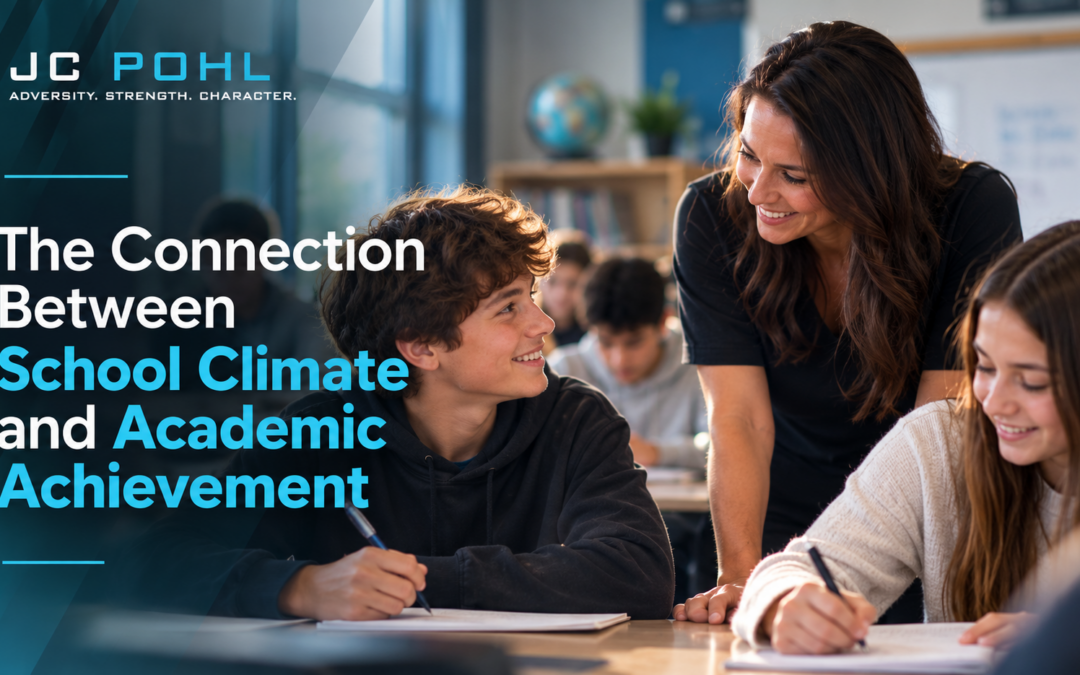
Walk into any school, and you can feel its culture almost immediately. Before you see test scores, graduation rates, or academic awards, you notice how students interact with one another. You observe the relationships between teachers and students. You hear the conversations in the hallways and watch how staff members greet students as they arrive. These moments may seem small, but together they shape something incredibly important: school climate.
School climate is often discussed as a separate initiative from academics, but the two are deeply connected. Students learn best in environments where they feel safe, respected, included, and supported. While curriculum, instructional strategies, and technology all play important roles in education, they cannot reach their full potential if students do not feel connected to the people and environment around them.
Academic achievement does not happen in isolation. It grows in schools where positive relationships are prioritized, trust is built, and students believe they belong. When educators invest in creating a healthy school climate, they are also investing in stronger academic outcomes.
What Is School Climate?
School climate refers to the overall experience students, teachers, and staff have within a school. It includes the quality of relationships, the sense of safety students feel, the level of respect shown throughout the campus, and whether people believe they are valued members of the community.
Unlike a mission statement posted on a wall, school climate is experienced every day. It can be seen in how teachers interact with students, how administrators support staff, how students treat one another, and how conflicts are handled when they arise.
A positive school climate is not defined by the absence of challenges. Every school experiences difficult situations. Instead, it is defined by how a school responds to those challenges while continuing to foster an environment built on trust, respect, accountability, and belonging.
Students Learn Best When They Feel Safe
Learning requires vulnerability. Students ask questions, solve unfamiliar problems, participate in discussions, and make mistakes every day. Those experiences become much easier when students feel emotionally and physically safe.
When students are worried about bullying, exclusion, embarrassment, or conflict, much of their energy is spent managing those concerns rather than focusing on learning. The brain naturally prioritizes safety before higher-level thinking, making it difficult for students to fully engage in classroom instruction when they feel anxious or disconnected.
Schools that intentionally create safe and supportive environments remove many of these barriers. Students become more willing to participate, collaborate with classmates, and take academic risks because they trust that mistakes are part of learning rather than something to fear.
Relationships Drive Engagement
One of the strongest predictors of student engagement is not found in a textbook. It is found in relationships.
Students are more likely to attend class consistently, complete assignments, participate in discussions, and remain motivated when they have positive relationships with the adults around them. A teacher who knows a student’s name, celebrates improvement, or simply asks how they are doing builds far more than rapport. They build trust.
That trust creates connection, and connection fuels engagement.
When students believe their teachers genuinely care about them as individuals, school begins to feel more meaningful. Learning becomes something they participate in rather than something that simply happens to them.
Belonging Improves Academic Performance
Every student wants to know they belong.
Belonging is more than having friends or participating in extracurricular activities. It is the feeling that a student is accepted, respected, and valued within their school community.
Students who experience a strong sense of belonging often demonstrate greater persistence when faced with academic challenges. They are more likely to seek help when they need it, recover from setbacks, and remain engaged even when coursework becomes difficult.
On the other hand, students who feel isolated or disconnected may gradually withdraw from classroom participation, attendance, and eventually their overall investment in school.
Creating belonging is not simply about improving school culture. It directly supports student achievement by helping young people develop the confidence needed to continue learning through challenges.
Positive School Climate Reduces Distractions
Schools spend significant time addressing behavioral issues, disciplinary concerns, absenteeism, and interpersonal conflicts. While these situations are sometimes unavoidable, many become less frequent when schools intentionally cultivate positive relationships and shared expectations.
Students who feel respected are often more willing to respect others. They are more likely to resolve conflicts appropriately, communicate openly with adults, and contribute positively to the classroom environment.
As disruptive behaviors decrease, teachers gain something incredibly valuable: instructional time.
Every minute spent building positive relationships ultimately creates more opportunities for meaningful teaching and learning.
Teachers Thrive in Positive School Cultures
School climate is not only about students.
Educators perform their best when they feel supported, respected, and connected to one another. Positive relationships among teachers, administrators, and staff contribute to greater collaboration, stronger morale, and increased consistency across the school.
When teachers feel valued, that positivity naturally extends into their classrooms. Students benefit from educators who are energized, collaborative, and committed to creating welcoming learning environments.
Healthy school climate is not something teachers provide for students alone. It is something everyone within the school community experiences together.
Academic Excellence and Emotional Well-Being Go Hand in Hand
For many years, schools often viewed academics and student well-being as separate priorities. Today, educators increasingly recognize they are closely connected.
Students who develop emotional awareness, resilience, healthy relationships, and confidence are better equipped to overcome academic challenges. They recover more quickly from setbacks, communicate more effectively with teachers, and remain motivated even when learning becomes difficult.
Supporting the whole child does not distract from academic excellence. It strengthens it.
When schools invest in both academic growth and emotional development, students gain the skills needed not only to succeed in school but also throughout their lives.
Leadership Shapes School Climate
Positive school climate does not happen by accident.
School leaders play an important role in establishing expectations, modeling relationships, and creating environments where students and staff feel respected. The tone set by principals and administrators often influences every level of the organization.
Leaders who prioritize visibility, communication, consistency, and relationship-building create schools where trust becomes part of the culture. Teachers feel supported. Students feel heard. Families feel welcomed.
These leadership decisions may not always appear on data dashboards, but they influence nearly every outcome schools hope to achieve.
Small Daily Actions Build Strong School Cultures
Improving school climate does not always require large initiatives or significant financial investments.
Often, it begins with small, intentional actions repeated consistently over time.
Greeting students at the door.
Learning names.
Celebrating growth instead of only recognizing achievement.
Checking in with students after difficult days.
Creating opportunities for student voice.
Listening before responding.
Recognizing staff contributions.
These everyday moments shape how people experience school. While each interaction may seem minor on its own, together they create a culture students and educators experience every single day.
Positive school climate is built through consistency rather than isolated events.
School Climate Is a Long-Term Investment
Improving school climate is not about finding a quick solution to complex challenges. It is an ongoing commitment to creating environments where students and educators can thrive together.
Schools that invest in relationships, trust, belonging, and collaboration often see benefits extending far beyond academic performance. Attendance improves. Student engagement increases. Teacher retention strengthens. Families become more connected to the school community.
Most importantly, students develop confidence that extends well beyond graduation.
The habits they learn in positive school environments—including empathy, communication, resilience, and accountability—become skills they carry into college, careers, and their communities.
Building Schools Where Students Can Thrive
Academic achievement will always remain an essential goal of education, but lasting success requires more than strong curriculum and effective instruction. Students need environments where they feel safe enough to ask questions, supported enough to take risks, and connected enough to believe they belong.
School climate is not separate from academic achievement—it helps make academic achievement possible.
When schools intentionally build cultures rooted in trust, relationships, respect, and belonging, they create environments where both students and educators can reach their full potential. Those are the schools that leave lasting impressions, not only because of the knowledge students gain, but because of the people they become along the way.
Questions School Leaders Often Ask
What is school climate?
School climate refers to the overall experience students, teachers, and staff have within a school. It includes relationships, safety, respect, communication, inclusion, and the overall sense of belonging people feel throughout the school community.
How does school climate affect academic achievement?
Students are more likely to engage in learning when they feel safe, supported, and connected. Positive school climates improve attendance, participation, motivation, and persistence, all of which contribute to stronger academic performance.
Can improving school climate raise student achievement?
While no single strategy guarantees higher academic outcomes, research consistently shows that schools with positive climates often experience better attendance, improved student engagement, stronger teacher collaboration, and higher levels of academic success.
What are the key characteristics of a positive school climate?
Positive school climates are built on trust, respectful relationships, emotional and physical safety, clear expectations, student belonging, open communication, and shared responsibility among staff and students.
What role do teachers play in shaping school climate?
Teachers influence school climate every day through their interactions with students. Building positive relationships, creating inclusive classrooms, encouraging student voice, and maintaining consistent expectations all contribute to a healthier learning environment.
How can principals improve school climate?
School leaders can strengthen school climate by modeling positive relationships, maintaining open communication, being visible throughout campus, supporting teachers, recognizing student growth, and making relationship-building a school-wide priority.
Does school climate impact teacher retention?
Yes. Teachers are more likely to remain in schools where they feel supported, respected, connected to colleagues, and valued by school leadership. A healthy school climate benefits both students and educators.
Why should school climate be considered part of academic strategy?
Academic success depends on more than curriculum alone. Students learn best when they feel emotionally safe, connected, and motivated. Investing in school climate creates the conditions that allow effective teaching and meaningful learning to take place.

President & CEO, TEEN TRUTH