
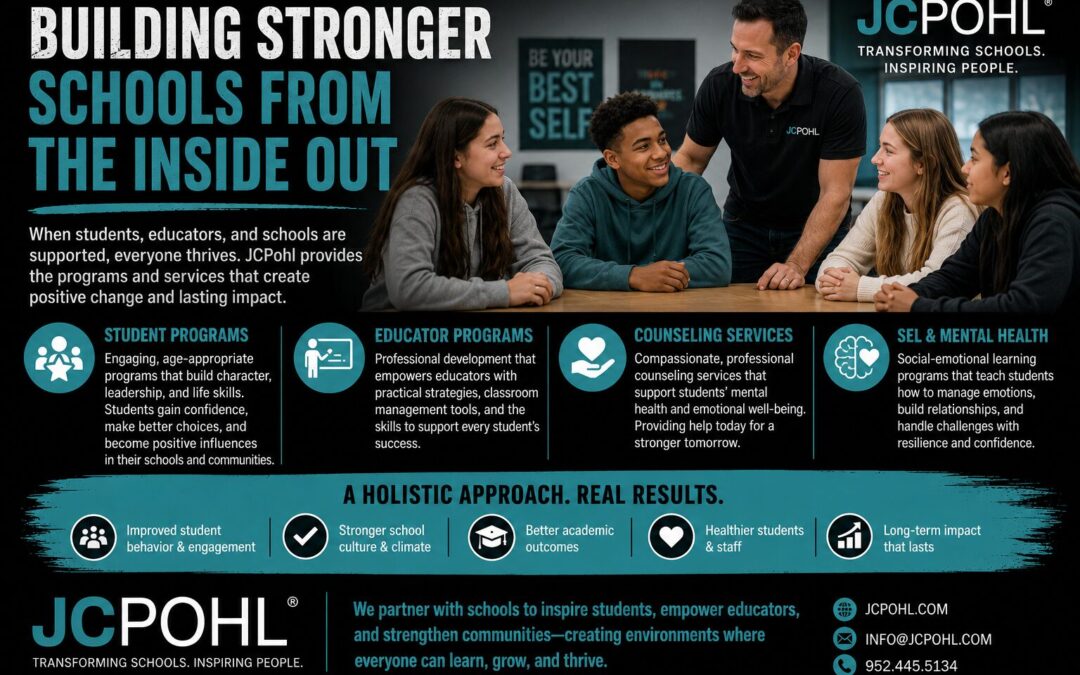
Student Programs, Educator Development, Counseling, and SEL
Schools today are facing more challenges than ever before. Students are dealing with stress, social pressure, and emotional struggles. Teachers are balancing increasing expectations while trying to support every student in their classroom. Administrators are working to create safe, positive environments where learning can truly happen.
Because of this, schools are beginning to take a more complete approach to education. It is no longer just about academics. It is about developing the whole student while also supporting the educators who guide them every day.
This is where student programs, educator development, counseling services, and social-emotional learning all come together. When these areas are aligned, schools can create an environment where students thrive, teachers feel supported, and the entire school culture improves.
Why Schools Need a Holistic Approach
In the past, schools often addressed challenges one at a time. If behavior was an issue, they focused on discipline. If students were struggling emotionally, counseling might be offered. If teachers needed support, professional development was provided.
While each of these solutions can help, they are often more effective when they work together. Students do not experience school in separate categories. Their emotions, behavior, and academic performance are all connected.
For example, a student dealing with stress at home may struggle to focus in class. This can lead to frustration, which may show up as behavior issues. Without the right support, the problem continues.
A holistic approach looks at the full picture. It combines student programs, educator support, counseling services, and SEL strategies to address the root of the issue.
When schools take this approach, they are able to create lasting change instead of temporary fixes.
The Role of Student Programs in School Success
Student programs play a key role in shaping how students think, act, and interact with others. These programs are designed to go beyond traditional classroom learning and focus on personal growth.
Programs that focus on leadership, decision-making, and self-awareness help students understand their role in the school community. They encourage students to take responsibility for their actions and make positive choices.
One of the biggest benefits of student programs is that they create engagement. When students feel connected to what they are learning, they are more likely to participate and stay motivated.
Student programs also provide a space for students to reflect. They can think about their goals, their behavior, and how they want to grow. This reflection is an important part of development.
When schools invest in strong student programs, they are investing in the future of their students.
Why Educator Development Matters Just as Much
While student programs are important, they are only one part of the equation. Teachers and staff play a critical role in shaping the school environment. Without the right support, even the best programs may not reach their full potential.
Educator development focuses on giving teachers the tools they need to succeed. This includes strategies for classroom management, communication, and supporting students’ emotional needs.
Professional development also helps teachers feel more confident in their role. When teachers feel supported, they are better able to support their students.
Another key benefit of educator development is consistency. When all staff members are aligned in their approach, it creates a stronger and more stable environment for students.
Investing in educators is one of the most effective ways to improve overall school performance.
The Importance of Counseling Services in Schools
Counseling services are an essential part of supporting students’ well-being. Many students face challenges that go beyond academics, and having access to support can make a significant difference.
School counselors provide a safe space where students can talk about what they are going through. This can include stress, anxiety, family issues, or social challenges.
Counseling services also help students develop coping strategies. Instead of reacting to situations, students learn how to manage their emotions and make thoughtful decisions.
In addition, counseling supports prevention. By addressing issues early, schools can reduce the likelihood of more serious problems developing later.
When counseling services are combined with student programs and SEL strategies, they create a strong support system for students.
How SEL Connects Everything Together
Social-emotional learning, or SEL, is the foundation that connects student programs, educator development, and counseling services. It focuses on skills like self-awareness, empathy, and decision-making.
SEL helps students understand their emotions and how those emotions influence their behavior. It also teaches them how to build relationships and handle challenges.
For teachers, SEL provides strategies for creating a positive classroom environment. It helps them recognize when students are struggling and respond in a supportive way.
SEL also supports counseling by reinforcing the skills students are learning. Instead of being limited to one setting, these skills become part of everyday life.
When SEL is integrated into all areas of the school, it creates a consistent and supportive environment.
Creating a Positive School Culture
School culture is shaped by the actions, attitudes, and interactions of everyone in the building. When students and staff feel connected and supported, it creates a positive environment where learning can thrive.
Student programs, educator development, counseling services, and SEL all contribute to this culture. Each element plays a role in shaping how students behave and how teachers interact with them.
For example, a student who feels supported is more likely to engage in class and treat others with respect. A teacher who feels confident and prepared is more likely to create a positive learning environment.
When these elements work together, they create a culture that supports growth and success.
The Impact on Student Behavior and Engagement
One of the most noticeable results of a holistic approach is improved student behavior. When students understand their emotions and have the tools to manage them, they are less likely to act out.
Engagement also improves. Students who feel connected to their school are more likely to participate and stay focused.
These changes may not happen overnight, but they build over time. As students develop these skills, they begin to take ownership of their actions.
This leads to a more positive and productive school environment.
Supporting Teachers and Preventing Burnout
Teachers play a critical role in student success, but they also face many challenges. Without the right support, it is easy for teachers to feel overwhelmed.
Educator development and SEL strategies help prevent burnout by giving teachers practical tools they can use in their daily work. This includes ways to manage stress, communicate effectively, and build strong relationships with students.
When teachers feel supported, they are more likely to stay engaged and committed to their work.
Supporting teachers is not just beneficial for them. It also has a direct impact on students and the overall school environment.
Why Schools Are Moving Toward Integrated Programs
More schools are recognizing that no single solution can address all of their challenges. Instead, they are moving toward integrated programs that combine multiple areas of support.
This approach allows schools to address both the academic and emotional needs of students. It also ensures that teachers have the resources they need to be effective.
Integrated programs create consistency. Students receive the same messages across different settings, which reinforces learning and behavior.
This approach is not only more effective, but it also creates a stronger sense of community within the school.
Long-Term Benefits for Students and Schools
The benefits of this approach extend far beyond the school year. Students who develop strong social-emotional skills are better prepared for future challenges.
They are more confident, better at communication, and more capable of handling stress. These skills are valuable in both academic and real-world settings.
Schools also benefit from improved performance, stronger relationships, and a more positive environment.
Over time, these changes can have a lasting impact on the entire community.
Building a Strong School Environment
Building a strong school environment requires more than just focusing on academics. It requires a commitment to supporting students, educators, and the overall culture.
By combining student programs, educator development, counseling services, and SEL strategies, schools can create an environment where everyone has the opportunity to succeed.
This approach not only improves behavior and engagement, but it also prepares students for the future. When students and educators are supported, the entire school benefits.
FAQ: Student Programs, SEL, and School Support
What are student programs in schools
Student programs are initiatives designed to support personal growth, leadership, and decision-making skills.
Why is educator development important
It helps teachers build skills, improve classroom management, and better support students.
What role do counseling services play
Counseling services provide emotional support and help students manage challenges.
What is SEL in schools
SEL stands for social-emotional learning and focuses on skills like empathy, self-awareness, and decision-making.
Do these programs improve behavior
Yes, when combined, they help students develop the skills needed to make better choices.

JC Pohl, LMFT
President & CEO, TEEN TRUTH