
Schools today are facing more pressure than ever before. Students are dealing with challenges that go far beyond academics. Mental health concerns are rising, social pressures are increasing, and many students feel disconnected from their school environment. At the same time, teachers are being asked to do more with less support, often managing both academic instruction and student well-being.
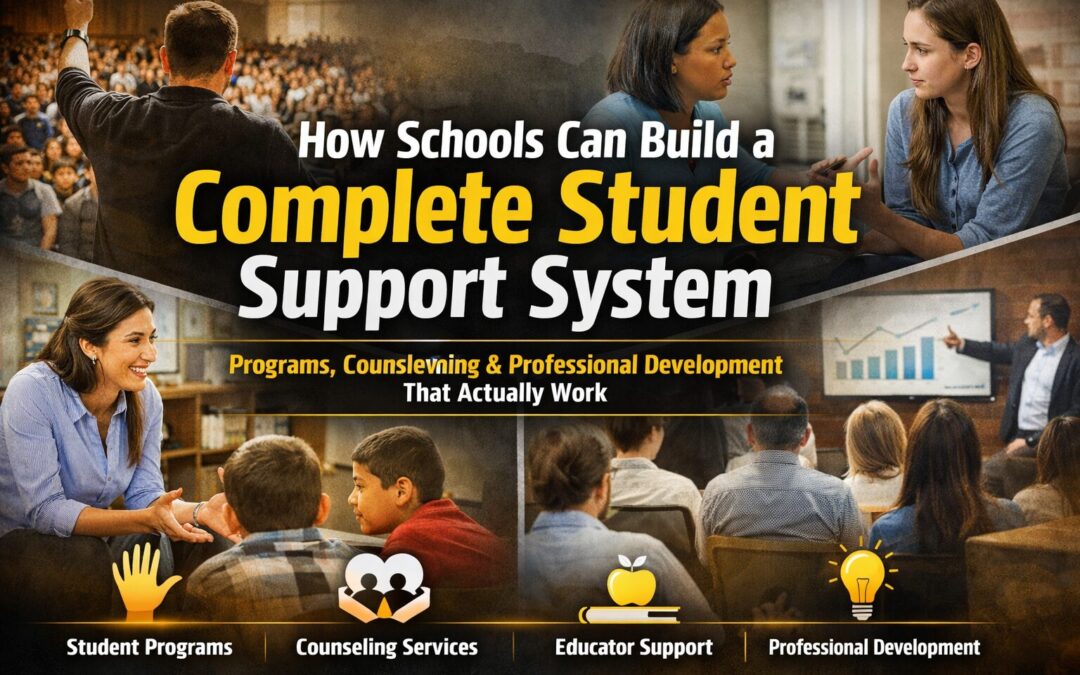
Because of this, many schools are beginning to rethink how they support students. Instead of relying on one-time solutions, they are looking for ways to build a complete system that addresses the needs of the whole student. This includes student programs, counseling services, educator support, and professional development.
When these elements work together, schools can create an environment where students feel safe, supported, and motivated to succeed. A complete student support system is not just about solving problems. It is about creating a positive school culture where students and staff can thrive.
Why Schools Need More Than Just One Program
For many years, schools have used individual programs to address specific issues. A school might bring in a speaker to talk about bullying or host a workshop on student motivation. While these efforts can be helpful, they often do not lead to long-term change.
The reason is simple. Student challenges are ongoing, not one-time events. Issues like anxiety, peer pressure, and lack of engagement develop over time and require consistent support. A single assembly or training session may create awareness, but without reinforcement, the message can fade quickly.
Teachers face similar challenges. They are expected to support students emotionally while also meeting academic goals. Without ongoing training and support, it can become difficult to manage both responsibilities effectively.
This is why schools are shifting toward a more complete approach. Instead of asking, “What program should we bring in?” schools are now asking, “How do we build a system that supports our students every day?”
The 4 Key Pillars of a Strong Student Support System
A complete student support system is built on four key pillars. Each one plays a different role, but together they create a foundation for lasting success.
Student Programs That Engage and Inspire
Student programs are often the first step in building a support system. These programs bring students together and introduce important topics in a way that is engaging and memorable.
Programs like JC Pohl School Assemblies & Youth Leadership Programs are designed to connect with students on a deeper level. Instead of simply delivering information, they use storytelling and real-life experiences to create an emotional connection.
When students feel connected to the message, they are more likely to reflect on their own behavior and make positive changes. These programs can address a wide range of topics, including bullying prevention, leadership, mental health, and personal responsibility.
Another important benefit of student programs is that they create a shared experience. When the entire student body hears the same message, it helps set a clear standard for behavior. This can lead to stronger peer relationships and a more positive school environment.
However, student programs are most effective when they are part of a larger system. They should be seen as the starting point, not the entire solution.
Counseling Services That Provide Ongoing Support
While student programs create awareness and inspire change, counseling services provide the support students need to navigate real challenges. School counselors and mental health professionals play a critical role in helping students manage stress, process emotions, and develop healthy coping strategies.
Services like Austin Counseling for Teens, Couples & Divorce Recovery show how important it is for students to have access to professional support. Many students face challenges outside of school that impact their behavior and performance. Without proper support, these challenges can grow over time.
Counseling services offer a safe and supportive environment where students can talk openly about their experiences. This can include individual counseling, group sessions, and crisis intervention when needed.
In addition to helping students, counseling services also support schools by identifying patterns and providing insights into student behavior. This information can help schools make informed decisions about programs and strategies.
When counseling services are integrated with student programs, the impact is even greater. Students who are introduced to important topics during an assembly may feel more comfortable seeking help when they need it.
Educator Support That Strengthens the Classroom Environment
Teachers are one of the most important parts of any student support system. They interact with students every day and have a direct impact on the classroom environment.
However, many teachers feel unprepared to handle the complex challenges students face today. Issues like mental health, behavioral struggles, and social dynamics require skills that go beyond traditional teaching methods.
This is where educator support becomes essential. Working with experts like JC Pohl can provide teachers with practical strategies they can use in their classrooms.
Educator support often includes training on classroom management, student engagement, and communication. It helps teachers understand why students behave the way they do and how to respond effectively.
When teachers feel supported, they are more confident in their ability to manage challenges and create a positive learning environment. This not only benefits students but also reduces teacher burnout and improves job satisfaction.
Professional Development That Creates Long-Term Impact
Professional development is what turns short-term efforts into long-term change. It ensures that teachers and staff continue to learn, grow, and apply new strategies over time.
Effective professional development focuses on real-world application. Instead of simply presenting information, it provides practical tools that educators can use immediately.
It also creates consistency across the school. When all staff members are aligned on expectations and strategies, it becomes easier to maintain a positive and supportive environment.
Professional development can take many forms, including workshops, training sessions, and ongoing coaching. The key is to make it continuous rather than a one-time event.
Over time, this consistency leads to stronger relationships, better communication, and improved outcomes for students.
How These Four Pillars Work Together
The true power of a student support system comes from how these four pillars work together. Each one supports the others, creating a complete and connected approach.
For example, a student program may introduce important concepts like empathy and accountability. Counseling services can then provide support for students who need additional help. Educator training ensures that teachers reinforce these concepts in the classroom. Professional development keeps everyone aligned and moving forward.
When these elements are connected, the impact is much greater than any single program could achieve on its own. Schools begin to see improvements not only in behavior but also in overall culture and student engagement.
This connected approach also helps create consistency. Students receive the same messages from multiple sources, which reinforces positive behavior and builds trust.
The Long-Term Benefits of a Complete Support System
Schools that invest in a complete student support system often see long-term benefits that go beyond immediate improvements.
One of the most noticeable changes is an improvement in school culture. Students feel more connected, respected, and supported. This leads to better relationships and a stronger sense of community.
Academic performance can also improve. When students feel supported emotionally, they are more focused and engaged in their learning.
Teacher retention is another important benefit. When teachers feel supported and equipped with the right tools, they are more likely to stay in their roles and continue making a positive impact.
Over time, these improvements create a more stable and successful school environment.
Common Mistakes Schools Make
Even with the best intentions, schools sometimes make mistakes when building their support systems. One common mistake is relying too heavily on one-time events. While assemblies and workshops can be powerful, they need follow-up to create lasting change.
Another mistake is not supporting teachers. Educators need ongoing training and resources to handle the challenges they face. Without this support, it can be difficult to maintain consistency.
Some schools also overlook the importance of counseling services. While programs and training are valuable, students need access to ongoing support as well.
Finally, a lack of coordination can limit effectiveness. When programs, counseling, and training are not aligned, it can create confusion and reduce impact.
What to Look for in a School Partner
Choosing the right partner is an important step in building a successful support system. Schools should look for partners who understand the full picture and can provide a range of services.
A strong partner will offer engaging student programs, effective educator training, and strategies that support long-term change. They will also be flexible and willing to adapt to the needs of each school.
Experience is another key factor. Partners who have worked with a variety of schools are often better equipped to handle different challenges and provide effective solutions.
How to Start Building a Student Support System
Getting started does not have to be complicated. Schools can begin by identifying their biggest challenges and focusing on one or two areas.
This might include bringing in a student program, expanding counseling services, or providing additional training for teachers. From there, schools can continue to build and connect each element over time.
The goal is not to create a perfect system overnight but to move toward a more complete and effective approach.
Small steps can lead to big changes when they are part of a larger plan.
Final Thoughts: Creating Lasting Change in Schools
Building a complete student support system is one of the most important investments a school can make. It goes beyond addressing individual problems and focuses on creating an environment where students and staff can succeed.
By combining student programs, counseling services, educator support, and professional development, schools can create a system that supports the whole student.
This approach leads to stronger relationships, improved behavior, and a more positive school culture.
When schools take the time to build a complete support system, they are not just solving problems. They are creating a foundation for long-term success.
FAQ: Student Support Systems in Schools
What is a complete student support system?
A complete student support system includes programs, counseling services, educator support, and professional development working together to support student success.
Why are student programs important?
Student programs help engage students, build awareness, and create shared experiences that support positive behavior.
How do counseling services help students?
Counseling services provide ongoing support for students dealing with emotional, social, and mental health challenges.
What role do teachers play in student support?
Teachers are essential because they interact with students daily and help reinforce positive behavior and learning.
Why is professional development important?
Professional development helps educators learn new strategies and stay aligned with school goals.
How can schools start building a support system?
Schools can begin by identifying their needs and gradually adding programs, support services, and training over time.

JC Pohl, LMFT
President & CEO, TEEN TRUTH