
Social Emotional Learning, often called SEL, has become an important part of modern education. Schools today recognize that learning is not only about reading, math, and science. Students also need skills that help them manage emotions, build relationships, make responsible decisions, and succeed in life.
An SEL curriculum is designed to teach these skills in a structured way. It helps students understand their feelings, communicate effectively, and work well with others. These lessons are often integrated into classroom instruction, advisory periods, or special programs that support student development.
Over the past decade, many school districts across the United States have adopted SEL programs as part of their educational strategy. Organizations like the Collaborative for Academic, Social, and Emotional Learning (CASEL) have helped define the framework used by many schools today. You can learn more about the research behind SEL from CASEL at https://casel.org.
Schools are increasingly realizing that when students develop strong social and emotional skills, they perform better academically, behave better in the classroom, and build stronger connections with teachers and peers.
What Are the Components of an SEL Curriculum?
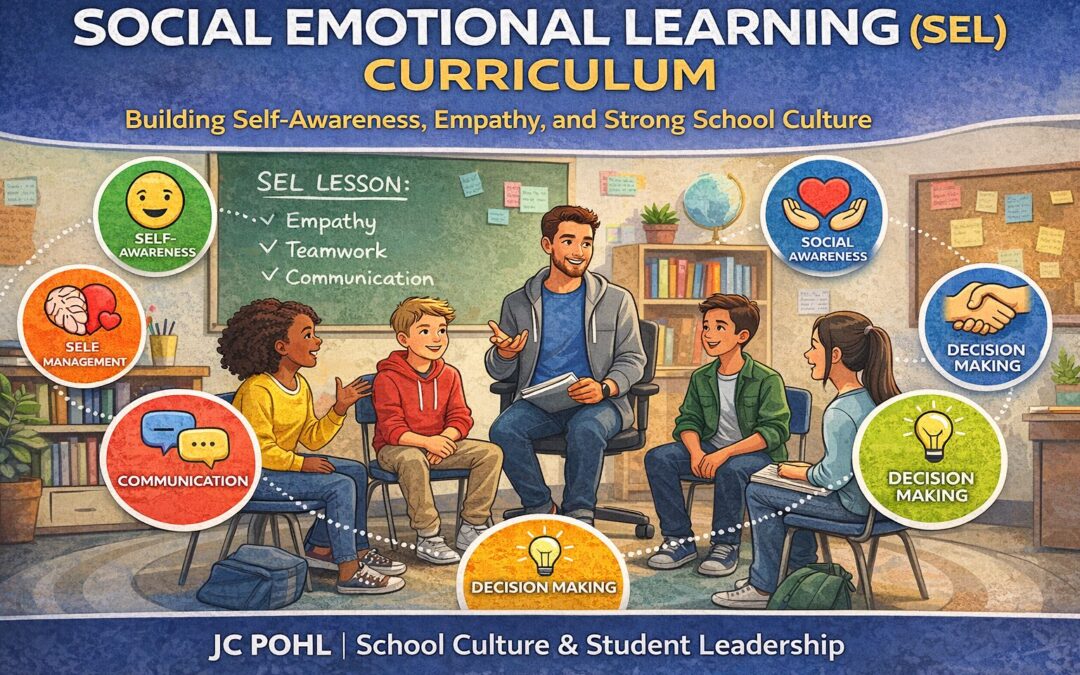
An effective SEL curriculum focuses on several key areas that help students grow emotionally and socially. These components are designed to support both personal development and positive interactions with others.
Self-awareness is one of the most important components. Students learn how to recognize their emotions, understand their strengths and weaknesses, and develop confidence in themselves.
Self-management is another major component. This includes skills like controlling impulses, managing stress, setting goals, and staying motivated during challenges.
Social awareness helps students understand and respect the feelings and perspectives of others. It also encourages empathy and appreciation for different backgrounds and cultures.
Relationship skills focus on communication, teamwork, and conflict resolution. These skills help students build healthy friendships and positive interactions with classmates and teachers.
Responsible decision-making teaches students how to think about the consequences of their actions and make choices that benefit themselves and others.
These five areas form the core structure of most SEL programs used in schools today.
What Are the Common Themes in SEL Curriculums?
While different programs may use different teaching styles, many SEL curriculums share similar themes. These themes help guide lessons and activities throughout the school year.
One common theme is emotional awareness. Students learn to identify emotions such as frustration, happiness, anxiety, or excitement. Recognizing these emotions helps them respond more thoughtfully in different situations.
Another common theme is empathy. SEL lessons often encourage students to understand how other people feel and respond with kindness and respect.
Communication is also a central theme. Students learn how to express themselves clearly, listen to others, and work through disagreements in a healthy way.
Goal setting and perseverance are also frequently emphasized. Many SEL programs teach students how to set goals, stay focused, and keep trying even when tasks are difficult.
Finally, many programs focus on building a positive school culture. SEL lessons often encourage respect, inclusion, and collaboration among students.
How to Implement an SEL Curriculum in Schools
Implementing an SEL curriculum requires thoughtful planning and support from educators and administrators. Schools typically start by selecting a program that aligns with their goals and student needs.
Teacher training is an important step in the process. Educators must understand how SEL lessons work and how to integrate them into their classrooms. Professional development workshops often help teachers learn strategies for leading discussions, managing classroom emotions, and modeling social skills.
Once teachers are trained, SEL lessons are often introduced through structured classroom activities, discussions, and real-life scenarios. Some schools incorporate SEL into advisory periods, while others weave it into regular academic subjects.
Consistency is also important. Students benefit most when SEL is reinforced throughout the school environment, including in classrooms, hallways, and extracurricular activities.
Many schools also involve families and communities in SEL efforts so students receive consistent messages both inside and outside the classroom.
Best SEL Curriculums for Different Age Groups
SEL programs are often designed for specific age groups because students develop emotional skills at different stages.
In elementary school, SEL lessons usually focus on basic emotional awareness and social skills. Younger students learn how to identify feelings, share with others, and practice kindness.
Middle school SEL programs often focus on communication, peer relationships, and self-confidence. This stage is important because students are beginning to experience more complex social situations.
High school SEL curriculums tend to focus on decision-making, leadership, and preparing students for future challenges such as college or careers.
Many schools look for programs that can grow with students as they move through different grade levels. Programs designed with a long-term development approach often produce stronger results.
What Are the Criticisms of SEL Curriculums?
While many educators support SEL programs, there are also criticisms and debates about how they are used in schools.
One criticism is that some people believe schools should focus primarily on academics rather than emotional education. Critics sometimes argue that social and emotional skills should be taught mainly by families rather than schools.
Another concern is that poorly implemented SEL programs may feel forced or ineffective if teachers are not properly trained. Without the right support, lessons may not produce meaningful results.
Some critics also worry about how SEL programs collect student data or assess emotional skills. They believe schools should be careful about how personal information is used.
Despite these concerns, many studies have shown that well-designed SEL programs can improve student behavior, academic performance, and mental health outcomes when implemented correctly.
Free SEL Curriculum Resources
Many educators search for free SEL curriculum materials to support their classrooms. There are several organizations that provide downloadable lesson plans, activities, and guides for teachers.
Websites such as https://casel.org and https://www.edutopia.org provide research and resources related to social emotional learning.
Teachers can also find free SEL curriculum PDFs online that include worksheets, reflection activities, and classroom discussion prompts.
These free resources can be helpful for teachers who want to begin introducing SEL concepts without committing to a full program.
Social Emotional Learning Companies
As interest in SEL has grown, many organizations now provide structured SEL programs, training, and resources for schools.
Some companies focus on curriculum development, while others provide assemblies, workshops, or mentoring programs that support student development.
Schools often look for programs that combine storytelling, student engagement, and real-world experiences to help students connect with SEL lessons.
Programs that emphasize student voice and authentic experiences often resonate strongly with young audiences.
Why SEL Matters for Student Success
Social emotional learning helps students develop life skills that go far beyond the classroom. Students who understand their emotions and communicate effectively are better prepared for challenges in school and later in life.
Research has shown that students who participate in SEL programs often show improved academic performance, stronger relationships, and reduced behavioral issues.
These skills also prepare students for future careers, where teamwork, communication, and emotional intelligence are highly valued.
People Also Ask
What are the five main areas of SEL?
The five main areas of SEL are self-awareness, self-management, social awareness, relationship skills, and responsible decision-making. These areas help students understand emotions, manage behavior, and build positive relationships.
What are the best professional development topics for teachers?
Professional development for teachers often includes classroom management, trauma-informed teaching, social emotional learning, student engagement strategies, and inclusive teaching practices.
What is the 70/30 rule in teaching?
The 70/30 rule in teaching suggests that students should be actively engaged for about 70 percent of classroom time while teachers guide and facilitate learning for the remaining 30 percent.
What are the seven social emotional skills?
Some SEL frameworks expand beyond the core five skills to include additional abilities such as empathy, resilience, communication, teamwork, emotional regulation, problem-solving, and self-confidence.
Social Emotional Learning
Social Emotional Learning is becoming an essential part of modern education. Schools are increasingly recognizing that emotional skills, communication, and self-awareness are just as important as academic knowledge.
A strong SEL curriculum helps students understand themselves, connect with others, and navigate the challenges of school and life. While there are debates about how SEL programs should be implemented, many educators believe they play a valuable role in building healthier school communities.
When implemented thoughtfully and supported by teachers and families, SEL programs can help students develop the skills they need to succeed both inside and outside the classroom.

JC Pohl, LMFT
President & CEO, TEEN TRUTH